
Cheap Is Not a Strategy
Cheap Is Not a Strategy


The wrong question
Why the cheapest drone is rarely the cheapest result, and how I think about price, effect, scale and change.
Many drone manufacturers start with the same question. How cheap and how fast can we make it?
I hear it in workshops, in pitch rooms and at every defence fair in Europe. Buyers ask the mirror version: how cheap can you sell it? Both questions sound like discipline. Both quietly assume that the lowest unit price and the shortest build time are the goal.
I understand why. Ukraine showed the world that a few hundred dollars of plastic, motors and explosives can stop a vehicle worth millions. That lesson is real. It changed how armies think about air power, artillery and procurement.
But somewhere along the way, price became a substitute for thinking. “Cheap” turned into a virtue on its own. Defence ministries now announce drone purchases by the million, and investors ask for the lowest unit cost on slide two.
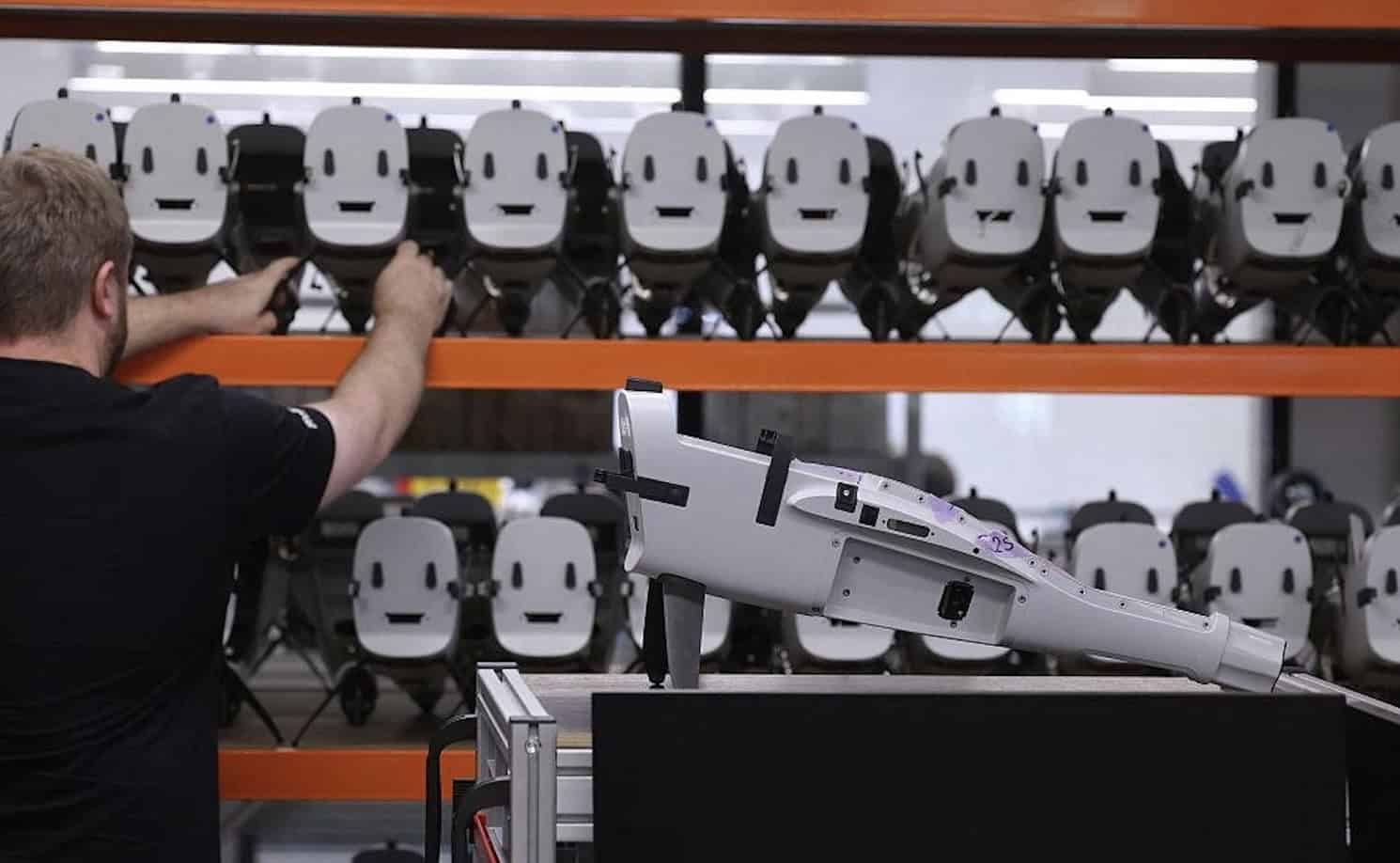
I want to be clear about my position before I argue it. I build long-range uncrewed strike systems. They are not the cheapest thing in the sky. So you may expect me to defend expensive platforms. I won’t. Expensive is not the answer either.
My argument is simpler. The price of a drone tells you almost nothing. The cost of a result tells you almost everything. And the two are not the same number.
Price is not cost
A drone is not a product. It is a bet that something will happen at the other end of a flight. The only honest unit of account is the cost of that something actually happening.
I use a rough formula. It is not elegant, but it keeps conversations honest.
Cost per effect = (unit price + launch, crew and logistics cost per sortie) ÷ (probability that the sortie produces the effect)
The numerator is what most people talk about. The denominator is what decides wars.
Look at what Ukrainian commanders report about the denominator. Robert Brovdi, who commands the Madiar’s Birds regiment, said at the end of 2024 that FPV efficiency across units on both sides sits between 20 and 40 percent. He counts only strikes that reached the target and were recorded. Michael Kofman, who studies this war closely, put it in harder terms this year: it often takes 15 or more FPVs to stop a well protected armoured vehicle, and 30 or more for a tank.
Now do the arithmetic with round, hypothetical numbers. A drone at 500 dollars that produces an effect one time in four costs 2,000 dollars per effect, before you pay a single person. Against a tank that needs 30 drones, it is 15,000 dollars in airframes alone. Still a good trade against a tank. I am not arguing otherwise.
But change the target. Put it 300 kilometres behind the line, under layered air defence, in an area where satellite navigation is jammed. The cheap drone’s probability of effect is not 25 percent. It is zero. And any price divided by zero is not cheap. It is infinite.
That is the whole argument in one line. Cheap is a property of the numerator. Effectiveness lives in the denominator. You cannot optimise one and ignore the other.
The hidden bill of cheap mass
The price tag on a cheap drone is real. It is also the smallest line on the bill. Here is what sits under it.
People. The scarcest resource in this war is not plastic. It is trained operators. A manually flown drone needs a skilled pilot for every sortie, and that pilot sits within reach of enemy fire. If your weapon costs 500 dollars but consumes hours of a scarce specialist per effect, it is a labour-intensive weapon. You are paying in the one currency you cannot print.
Losses before the target. A sortie can fail on the ground, fail in the air, fail at the terminal phase, or arrive and not detonate. Every one of those failures still consumed a battery, a warhead, transport, a launch window and a crew’s attention. Brovdi lists most of them in one breath: electronics fail, drones detonate en route, electronic warfare suppresses a large share, small arms take some down.
Logistics. Mass is heavy. Millions of drones mean millions of batteries, warheads, chargers and spare parts moving toward the front through roads that the enemy watches and strikes. Mass at the factory gate is not mass at the launch point.
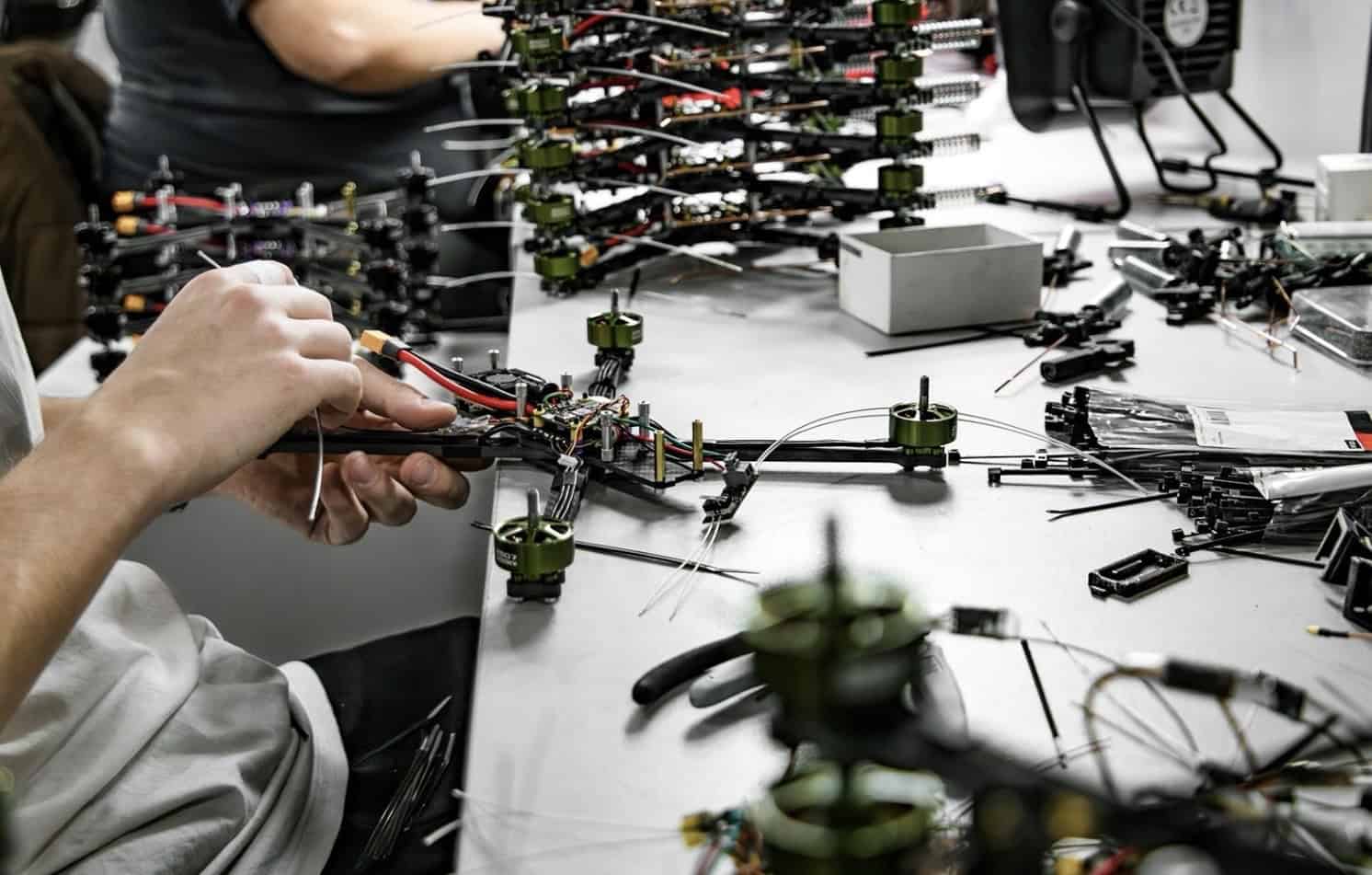
Friction with your own side. Dense drone use needs deconfliction with friendly electronic warfare and with other drone crews. Get it wrong and your own jammers become your enemy’s best air defence. This is not theory. It has been reported on both sides of the line.
Accounting. This one hurts the most. Brovdi made a point I think every procurement office should print on the wall. Some drones bought early in the war are now technologically outdated. The state keeps buying them, pilots keep receiving them, and the list of destroyed targets does not grow. That is what happens when you measure deliveries instead of effects.
None of this makes cheap drones bad. It makes the unit price a misleading number. If you do not count these costs, someone on the front line pays them for you.
Where cheap mass wins
I respect cheap mass. Ukraine is alive partly because of it. In 2025 the Ukrainian armed forces received a record 3 million FPV strike drones, according to the Ministry of Defence. Kofman estimates Ukraine now uses 6,000 to 8,000 FPVs a day in the warmer months. No army in history has fielded precision at that volume.
Cheap mass wins under four conditions.
- The defence is finite. When the other side has a limited number of interceptors, jammers and gunners, numbers beat quality. Saturation is a strategy, and it only works with things you can afford to lose.
- The kill chain is short. Close targets, short flight times, a crew that sees the target and the drone at the same time. Here a simple airframe with a good operator is very hard to beat.
- The platform is a consumable. A cheap drone is ammunition. Nobody hesitates to fire it. That matters more than people think. A weapon that commanders are afraid to lose is a weapon that stays in the box.
- You need to learn fast. Cheap designs can change every few weeks. You can test a hypothesis in combat on Monday and change the design by the end of the month. That learning loop is worth more than any single airframe.
The Ukrainian system also shows something Europe often misses. Mass did not come from one big contract. It came from an ecosystem. Brigades now order drones directly from manufacturers through the DOT-Chain Defence marketplace, which lists more than 180 FPV models with an average delivery time of around ten days. Mass is a property of the feedback loop, not of the unit price.
Where expensive earns its price, and where it fails
Now the other side. There are missions where cheap simply does not arrive.
Depth is the first one. A target far behind the front sits under layered air defence, behind hours of flight, in an environment where satellite navigation is jammed or spoofed. A drone built for a ten kilometre flight has nothing to offer there. To reach depth you need range, payload, survivability and GNSS-free navigation. Each of those costs money. None of them is optional.
The value of the target is the second. A refinery, a radar, an ammunition depot, an airfield. When the target is worth tens or hundreds of millions to the enemy, the question is not “how cheap is my drone?” It is “how many of my drones arrive?” One platform that reaches the target is cheaper than ten that do not.
The third is the cost of the attempt itself. Every deep sortie consumes planning, intelligence, launch preparation and a window that may not open again. If the probability of success is low, you are not saving money. You are wasting the window.
But I have also watched expensive platforms fail, and the failures follow a pattern.
- Too precious to use. When a system costs as much as a building, commanders protect it instead of using it. It ends up in reserve, waiting for a perfect target that never comes.
- Too few to matter. Ten exquisite platforms are a demonstration. They are not a capability. The enemy can plan around ten.
- Too slow to change. A platform designed over five years and certified over two more meets an adversary that adapts every month. By delivery day, it is solving last year’s problem.
- Too dependent. A sophisticated system with a long, fragile supply chain is only as available as its rarest component.
The lesson is not “cheap or expensive.” Expensive must justify every dollar in the denominator, and it must still be produced, used and changed at the pace of the war.
The adaptation clock
There is a variable that almost nobody puts on a spreadsheet. It is time.
In this war, countermeasures change in weeks. Control frequencies shift. Jammers get retuned. One side moves to fibre-optic control, and the other side’s electronic warfare loses its target overnight. Interceptor drones appear and scale to nearly a thousand a day reaching Ukrainian units. Every capability has a half-life, and that half-life keeps getting shorter.
So I add a second question to every cost discussion. When the enemy changes, what does it cost me to follow?
There are only three honest answers.

Replace. Cheap drones answer by being thrown away and redesigned. This works if your production line can switch fast and your old stock does not pile up in warehouses. Brovdi’s point about outdated drones still being bought is exactly this failure: the line kept running after the design died.
- Update. A more expensive platform answers by changing what is inside it. Mission software, navigation, the communications link, the payload. The airframe lives for years. The brain changes every month. This is how expensive can stay relevant.
- Freeze. The worst answer. An expensive platform that cannot be changed without a new certification cycle. It costs the most, and it ages the fastest relative to its price.
This is why I do not trust any price comparison that ignores the cost of change. A cheap drone that is obsolete in six weeks and a costly platform that is obsolete in six months can end up with the same cost per effect. The difference is who designed for change from day one.
Scale is not a number
Europe talks about scale as a quantity. A million drones. Two million. I hear these figures at every conference. They are the wrong way to think about it.
Scale is the ability to keep producing, fielding and improving a system for years, while someone is trying to stop you. It has four parts, and quantity is only one of them.
- Volume. How many units leave the line each month.
- Resilience. Whether the line keeps running when a factory is struck, a component is embargoed or a single supplier decides to stop shipping.
- People. Whether you can train operators, technicians and planners as fast as you build airframes.
- Feedback. Whether combat data reaches the designers in days, not in annual reviews.
Ukraine did not reach millions of drones because they were cheap. It reached them because it built all four parts under fire, and because the people who use the drones can talk directly to the people who make them.
I see two mistakes in European procurement. The first is buying small batches of expensive systems and calling it modernisation. The second is the opposite: announcing huge orders of cheap drones without the feedback loop, the operators or the update path. The first gives you a museum. The second gives you a warehouse.
Scale applies to expensive platforms too. A deep-strike system that can only be built in tens is a prototype with good marketing. If a platform matters, it has to be producible in hundreds, by a supply chain that does not depend on any single country, and updatable without stopping the line.
How I weigh it: five questions
When I look at any strike system, ours or anyone else’s, I do not start with the price. I start with five questions. The price comes last, and by then it usually explains itself.
- What is the target worth to the enemy? Not to me. To them. A trench and a refinery do not belong in the same cost discussion.
- What stands between launch and target? Distance, air defence, electronic warfare, navigation denial, weather. Every layer cuts the probability of effect. Count them honestly.
- What is the measured probability of effect? Measured in combat and recorded, not claimed in a brochure or shown in a test range video. If nobody can give you this number, nobody knows the real cost.
- What does change cost? When the enemy adapts next month, do I replace, update or freeze? How long does each take, and who pays for it?
- Can I sustain it? Can I produce it, staff it and supply it at the rate the mission needs, for as long as the war lasts?
Run a cheap FPV through these questions against a vehicle at the front, and it wins. Run it against a radar 400 kilometres away, and it fails at question two. Run an exquisite cruise missile through them for a daily tactical target, and it fails at question five.
The answer is almost never one system. It is a portfolio. Cheap mass where the defence is thin and the target is close. Affordable precision in the middle. Fewer, more capable platforms for depth and for targets that change the course of a campaign. And all of it designed to change at the speed of the war.
Cheap is a property. Not a strategy.
The drone revolution in Ukraine is real. But the lesson Europe is taking from it is often the wrong one. The lesson is not “buy cheap.” The lesson is “measure effect, learn fast, and build the industry that lets you do both.”
Ukraine did not survive because its drones were cheap. It survived because it learned faster than russia, counted honestly at the unit level, and let the front line talk to the factory.
I would rather spend more on a system that arrives than less on ten that do not. I would also rather spend less on a system that I can change every month than more on one that I cannot change at all. Both sentences are true at once. Holding both in your head is the job.
The enemy does not care what your drone cost. He cares whether it arrived.


